


The Daily Drive is a reader supported newsletter. Your paid subscription can help sustain our full-time coverage of golf.
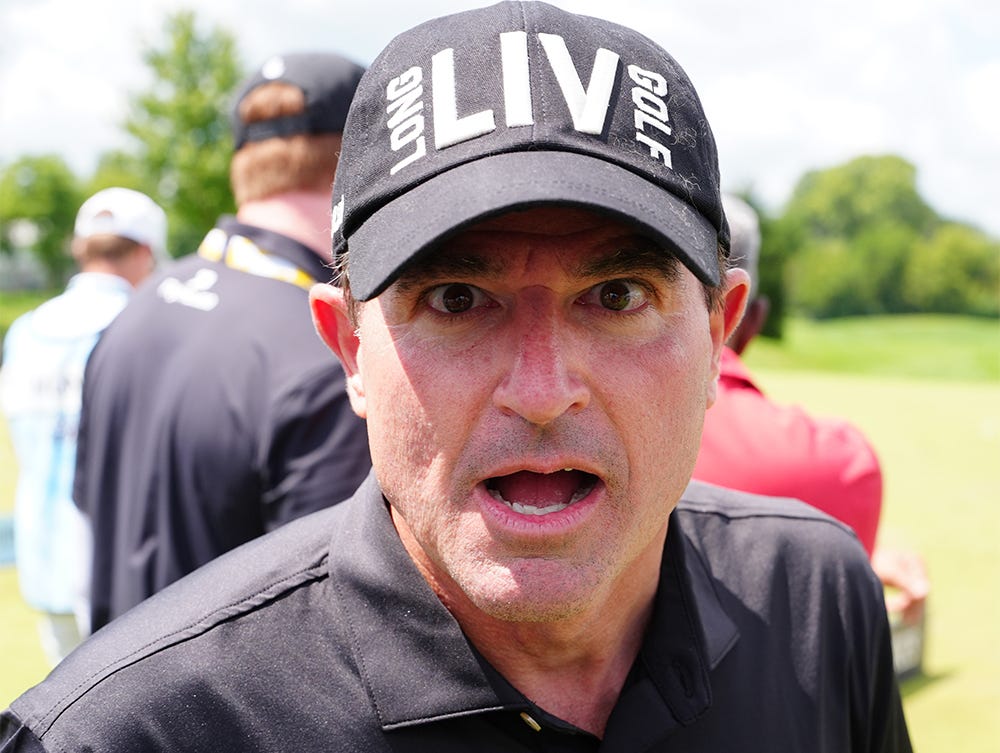
LIV CEO Scott O’Neil’s efforts to save LIV may have reached a dead end (Brian Spurlock/Icon Sportswire via Getty Images)
This is the way LIV Golf “but Louder” ends? Not with a bang, but a whimper?
The Financial Times first reported late Wednesday that investor BC Partners is “dropping its bid to relaunch LIV Golf,” citing a lack of lining up enough prominent player support to build a tournament schedule around in 2027.
Various outlets confirmed the news, with ESPN citing sources confirming — barring a last-minute buyer — that BC Partners is pulling out of its deal to invest $300 million in a LIV 2.0. and that the bankruptcy proceedings on Thursday will transition from a reorganization to the liquidation of the breakaway league’s assets. The Athletic reported the league’s full shuttering is “imminent.”
“The Chapter 11 case will now turn to the resolution of claims held by players over previous contract guarantees and money owed to vendors who provided services to the league and golf tournaments,” the Financial Times story said. “Both groups are designated as unsecured creditors, with their sum total of claims reaching into the hundreds of millions of dollars.”
The upstart league that threatened the established golf ecosystem and prompted survival changes at the PGA and DP World Tours came to a premature close in August following the Saudi Arabian sovereign wealth Public Investment Fund’s decision in April to stop funding LIV Golf after the the 2026 season. The PIF had poured more than $5 billion into LIV Golf over five seasons with little return on its investment into the hybrid individual/team golf concept.
The PIF’s withdrawal prompted LIV CEO Scott O’Neil to go on a search for new investment to bankroll a future for the league. O’Neil made a deal with BC Partners in September to invest $300 million into a more streamlined LIV 2.0, contingent upon meeting certain parameters including getting enough buy-in from the league’s marquee players to make the league viable.
The league filed for Chapter 11 bankruptcy to try to reorganize. But the league has been hemorrhaging talent as prominent players have announced that they would not return to LIV in 2027 — Jon Rahm, Sergio Garcia, Tyrrell Hatton, Louis Oosthuizen, Graeme McDowell, Bubba Watson, Tom McKibbin, David Puig, Abraham Ancer, Ian Poulter and others all opting out.
The most prominent player to signal a desire to return is two-time U.S. Open winner Bryson DeChambeau. ESPN confirmed the Financial Times’ claims that a “critical mass” of unnamed players had committed to compete in the league next season (a reported 30 were committed while 10 more were supposedly considering it) but that BC Partners “pulled the plug when negotiations with the golfers dragged on.”
Jon Rahm is the biggest fish who didn’t believe in LIV 2.0’s future enough to sign on.
“I wasn’t thrilled with the changes they were doing to 2.0 and I just wasn’t willing to follow that path,” he said. “It wasn’t anything special, anything that stood out. I just, yeah, I didn’t like what they were going with 2.0.
“Too many unknowns at the time and there are still quite a few. It seemed like it was going away from team golf and some of the things that made LIV, LIV. It just became more of a regular tour. So yeah, it wasn’t really ever much of a consideration to be honest.”
Perhaps the decisive blow against LIV 2.0 was the DP World Tour’s decision last month to no longer provide an alternative option for LIV golfers, with CEO Guy Kinnings announcing that players would be required to pick a side in order to compete in the European circuit’s events from 2027 onward.
In an interview published this week by The Scotsman’s Martin Dempster, Kinnings said “we also have to protect the tour against an entity who spent, so we are told, over $7 billion, with one of their aims being to destroy the DP World Tour.”
Rory McIlroy fiercely supported Kinnings’ decision to play hardball.
“They took players; they took sponsors; they turned professional golf into an arms race,” McIlroy said of LIV on Wednesday ahead of the Abu Dhabi Aldar Championship. “They were going around Augusta saying they wanted to destroy the European tour. Yeah, I agree with everything.
“I think people that don’t agree are probably very shortsighted. Look, there was some of the money that they used the right way, created the International Series on the Asian Tour, great for a couple years. But where did that leave the Asian Tour? They left them high and dry. Asian Tour came back into the fold — did a partnership with the PGA Tour and the European tour.
“Again, this was always going to be the case. It was always going to be good for a few years until something like this happened, or they realized they weren’t going to get any return on investment, or they were going to leave the golf space and go invest in something else and invest in something that would actually make them money.”
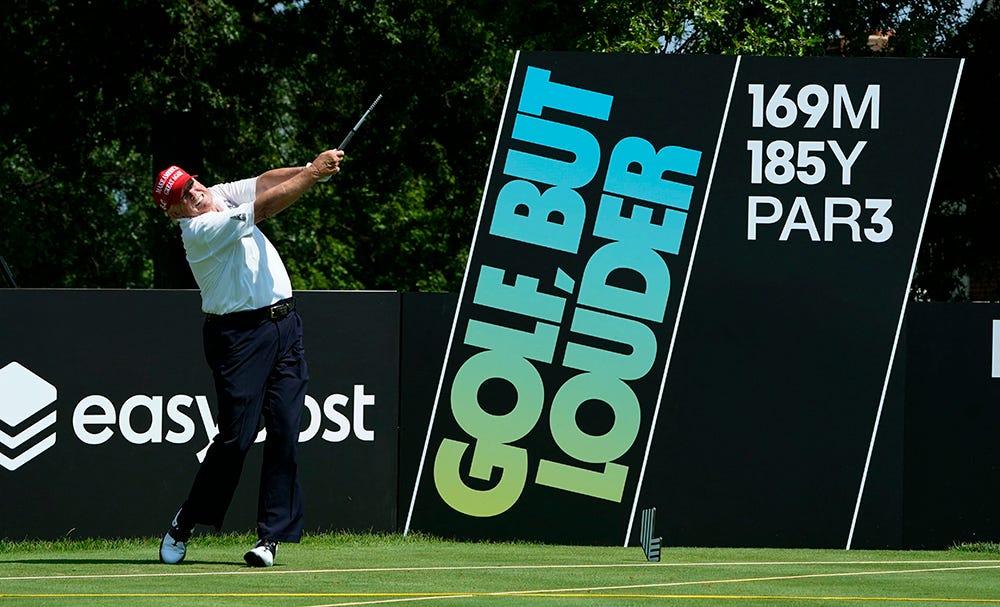
Donald Trump and his followers had been among LIV’s biggest supporters (Timothy A. Clary/AFP via Getty Images)
As recently as last weekend, DeChambeau remained bullish on LIV’s future and was working to help push it forward.
“The business model makes a lot of sense,” DeChambeau said on the Figuring Out podcast. “And we’re actually working through that right now for this new model where it will make full financial sense. It’s no funny business, no nothing. It’s going to be done right. And this is going to be a league, hopefully, that exists forever. It’s not combative.”
In a matter of just a few days — coincidentally just a day after long-time LIV golf supporter Donald Trump’s MAGA movement suffered a decisive defeat from the American electorate in the midterm elections — LIV is reportedly heading for the dustbin of history. LIV Golf played events on three different Trump-owned golf courses in the U.S. and the American president tried and failed to broker a deal between the PIF and PGA Tour in 2025.
A hearing is scheduled for 11:30 a.m. Thursday with U.S. Bankruptcy Court Judge Michael B. Kaplan, which should reveal LIV’s pending liquidation instead of reorganization. In its Chapter 11 bankruptcy protection filing, LIV indicated it had between $100 million and $500 million in assets and $500 million to $1 billion in liabilities.