


The Daily Drive is a reader supported newsletter. For about $1 a week, your paid subscription can help sustain our full-time coverage of golf.
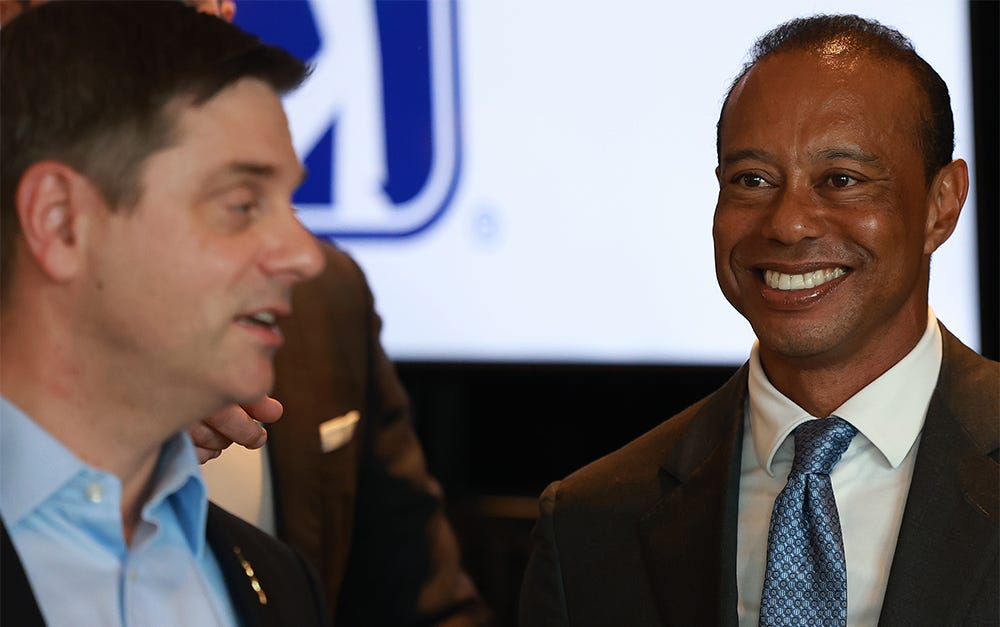
Tiger Woods helped forge the new competitive model with CEO Brian Rolapp. (Andrew Redington/Getty Images)
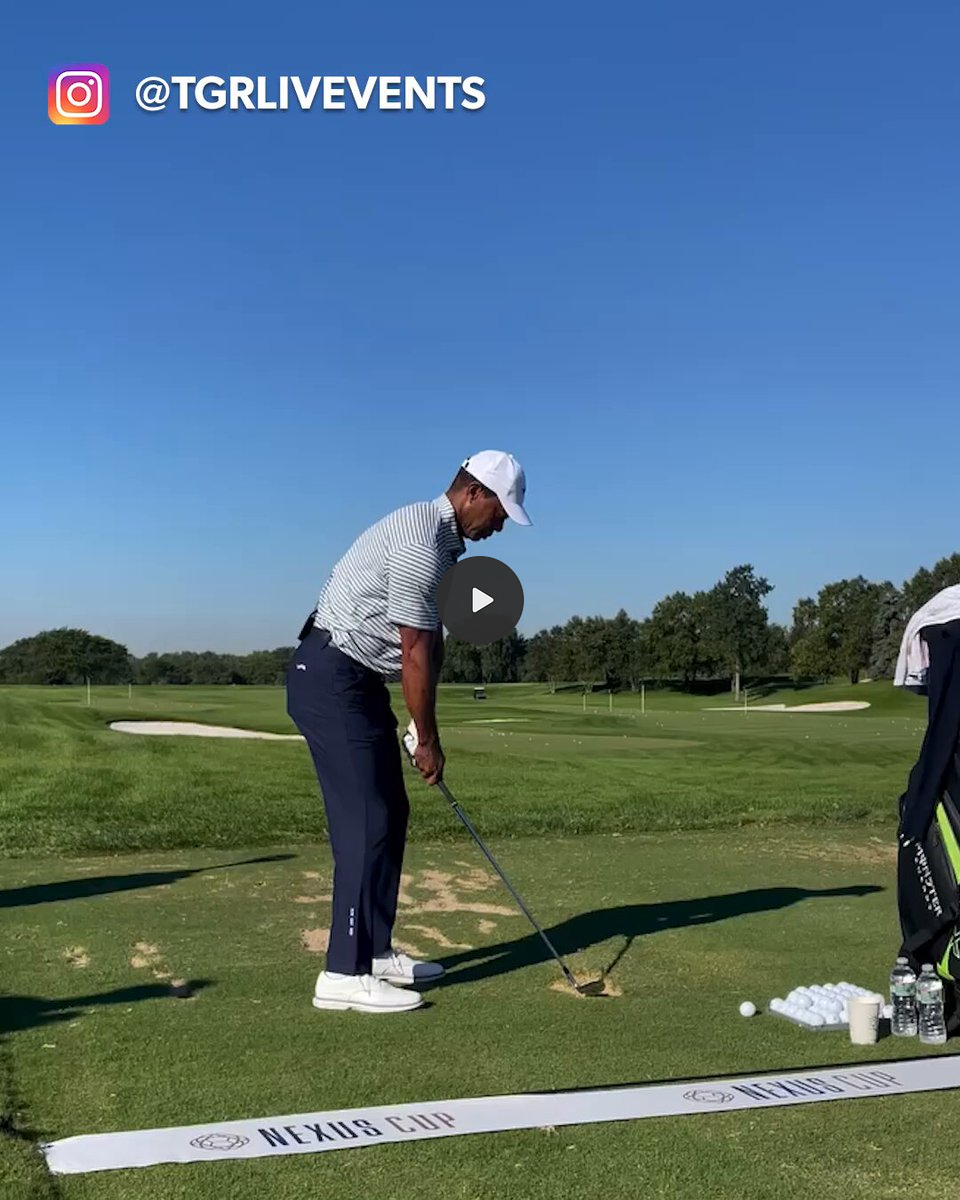
Tiger Woods hit golf balls on Tuesday at Liberty National in New Jersey as part of a clinic for his foundation. It was the first public instance of him swinging a golf club since his legal troubles in March led to a rehab stint and recently having his driver’s license suspended.
Woods, 50, has not played an official golf tournament in more than two years amid his various physical issues and the recent off-course problems. But the sense is that he would always try to play again, even if in limited appearances.

But his path to the Championship Series in 2028 — a new competitive model that he helped create — won’t be a smooth one. At least not by the written letter of the eligibility requirements at this point.
Woods, who serves on the Future Competition Committee that put together the PGA Tour’s new two-tiered model that will launch in 2028, would need to take a one-time career money list exemption to be able to compete on the upper level circuit that year. And he’d need to play 15 events in 2027 to be eligible to do that.
Also in today’s DD …
How will the DP World Tour fit into PGA Tour’s new competitive model?
That latter stipulation can probably be circumvented by a medical exemption. But what about beyond 2028? Woods would need to qualify by virtue of winning a tournament or finishing among the top 90 points earners, neither of which is going to be easy playing what is expected to be a limited schedule, if at all.
The Tour officially unveiled its eligibility criteria on Tuesday for the Championship and Challenger Series. CEO Brian Rolapp, chief competitions officer Tyler Dennis and senior vice president Kirsten Burgess all took part in a media conference call announcing it.
For now, the PGA Tour has not put forth a special carve-out for Woods — as is the case now for signature events — but didn’t exactly shut the door on the idea.
“What we announced is how that’s going to work, generally speaking,” Dennis said. “You saw the general parameters. There’s still work to do on that to finalize the exact calculations and everything. Obviously, Tiger would be part of that.”
Rolapp added that Woods’ role as chairman of the committee was such that he was acting in terms of the overall competitive goals of the new system. Rolapp and the Tour have leaned into a “meritocracy” narrative that was borne out by the various qualification criteria.
“There wasn’t once about ‘do we need to change rules for Tiger?’” Rolapp said. “His focus had been on trying to make the PGA Tour live way past any of us, so that was clearly his orientation as well as the rest of the committee.”
It is hard to envision Woods advocating for himself in this instance. Still, we’re talking about a 15-time major winner who is tied for the all-time lead in PGA Tour victories with 82. That legacy makes Tiger pretty much able to play any event he wants to now.
In 2024, the PGA Tour implemented a rule specifically for Woods which allows him to compete in any signature event with the stipulation that a player has to have won 80 times on the PGA Tour. Only the late Sam Snead shares that 80-win distinction with
