


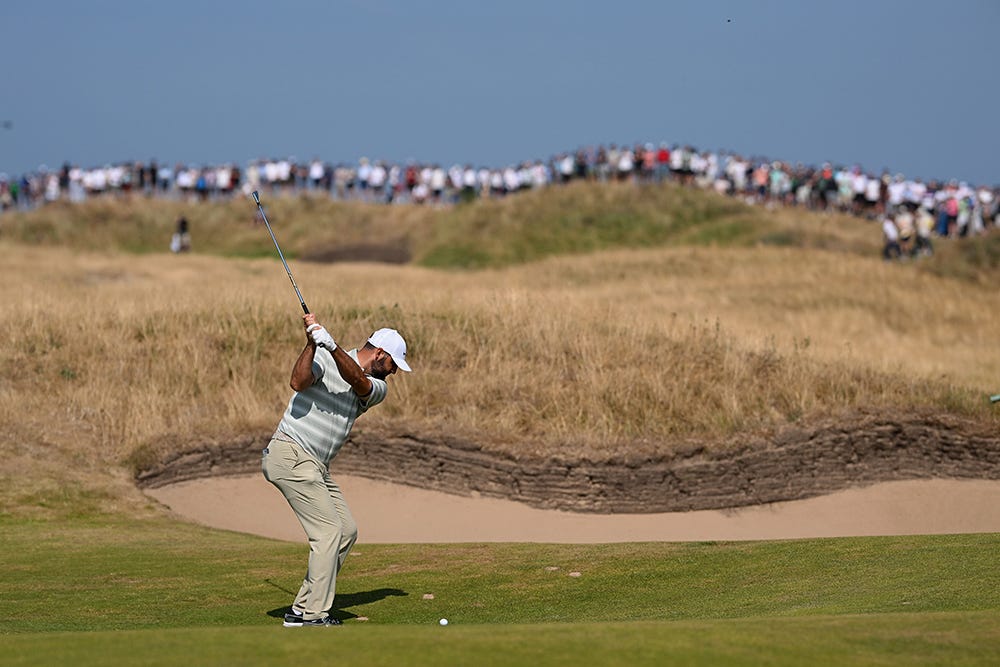
Scottie Scheffler believes there’ll be more thinking before choosing shots (Stuart Franklin/R&A via Getty Images)
SOUTHPORT, England — The grass is not green, the fairways are hardly lush. Beauty comes in diverse forms on a links, and Royal Birkdale is certainly no different. Brown is the color of choice this week and embracing all that entails is among the key factors in navigating the course for this week’s Open Championship.
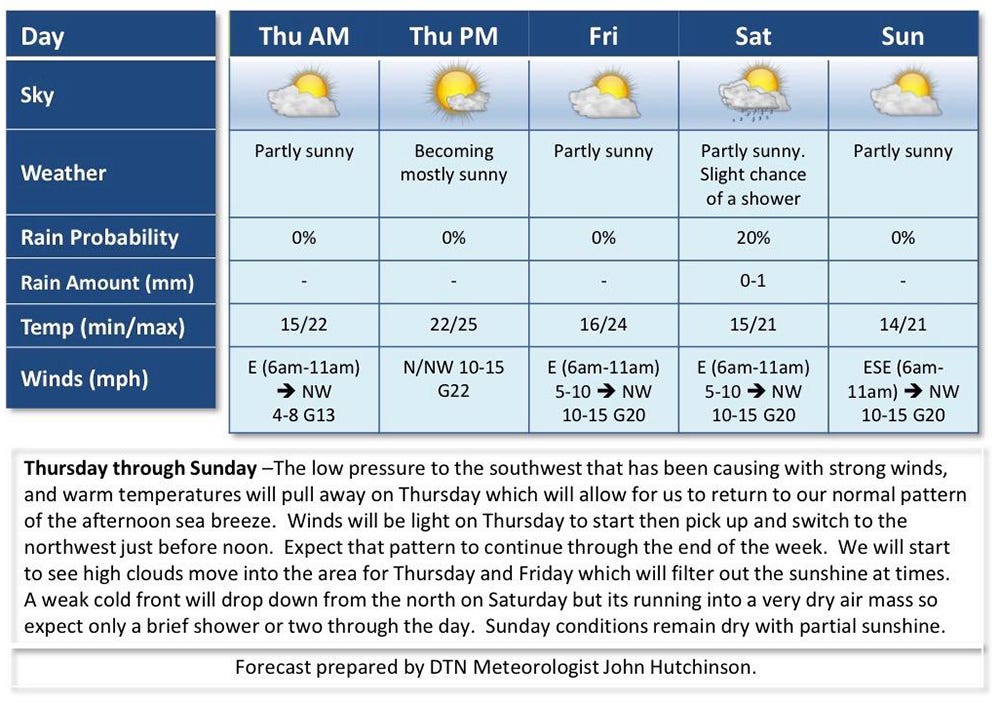
A warm, dry spring and summer has led to a fiery links, one that will present numerous challenges as the 154th Open begins on Thursday morning. It is the kind of setup that presents an interesting test, one without the standard choices.
“When you give professional golfers options and you can create a little bit of doubt in their minds in terms of should I play this shot or that shot, that’s when things start to get fun, especially for the viewer,” said Rory McIlroy. “Not so much for us but … that to me is the sign of a good championship test.”
The turf here is dry and firm. It is so hard that walking for extended periods of time leads to sore feet and a bad back. With humps and bumps and hills to navigate on top of it, it would easier to walk for hours on concrete than Birkdale’s links.

The Open hasn’t had a venue that played this firm and fast since 2022 at St. Andrews. And while that doesn’t mean scoring will be difficult, it does mean different challenges are presented.
Take, for instance, these diverse ways of looking at the strategy from Jon Rahm, Scottie Scheffler and Justin Rose.
Rahm: “It all depends on the wind. With the wind we had (Monday), where (No.) 10 basically played straight right to left, we all hit 5- or 6-iron on 11 and still almost reached that bunker on the left. We hit 5- or 6-irons on 16 and almost reached — actually, some people reached the bunker on the left.
“(On) 10, you could make an argument for a 5-iron (off the tee) as well, and if it keeps getting firmer and stays warm with the same wind direction, you could have quite a few holes where that 6-iron is going 280 yards. It’s unprecedented for sure.”
Scheffler: “The ball’s just going to run for forever pretty much. The fairways this week are really tight, so you get a lot of cross-winds. They can be difficult to hold just because they’re so fast and they’re so firm. So there’s a lot of thinking off the tee on whether or not you want to just hit driver up there somewhere and kind of play from the rough most likely, or do you want to start hitting some irons, getting it in some fairways and hitting some longer shots into the greens?
“On each hole there’s a good bit of strategy; there’s a decent amount of thinking. If it wasn’t as firm as it is now, there wouldn’t be as much decision-making, but I think with the firmness, it creates a whole lot more challenges, I think, for us as players, just to try and control your ball and figure out where it’s going to end up.”
Rose: “The bunkering, it’s a very narrow golf course off the tee. I think the rough is burning out, so there is an opportunity for players if they want to feel like they can sort of hit it over corners and potentially run through and just accept 60 to 80 yards out of the rough, that play is there. So you might see a varied bunch of strategies.
“I think ultimately I feel it’s playing like a classic links where you play it, you try to run it up as close as you can to the pot bunkers, and play mid to short irons into the greens. Obviously you just rely upon good strategic golf and putting to the corners and hopefully making a few putts. That’s sort of how I see the course right now.”
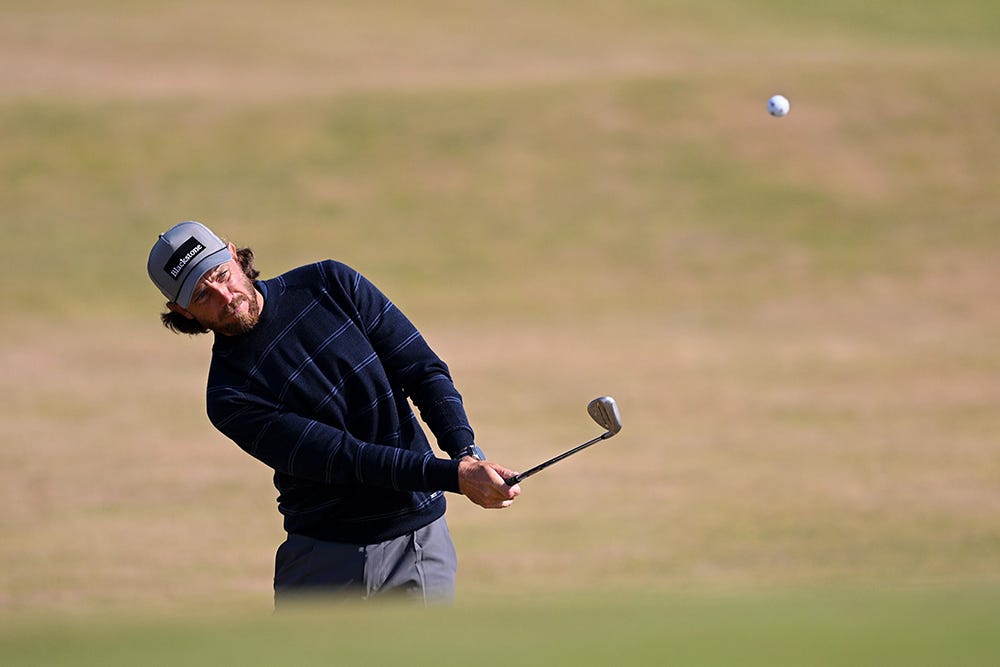
Tommy Fleetwood at home in the prevailing brown of his hometown course (Stuart Franklin/R&A via Getty Images)
This is the 11th time that Royal Birkdale has hosted the Open Championship, and the scores have varied greatly based on the weather. When Mark O’Meara defeated Brian Watts in a playoff in 1998, they finished at even-par 280. Ten years later, Pádraig Harrington, who battled through rain, wind and cold for most of the championship, finished at 3-over 283.
The last time the Open was here, Jordan Speith won at 12-under 268 during a week that saw a smattering of conditions, but mostly benign.
Without wind, it is quite possible for some low scores. And those who tee off early Thursday appear to have an advantage. Click here for the full tee sheet for Thursday’s first round of the Open.
But a lot can change at the Open, including the forecast — and perhaps the way players approach how they handle the course.
Rahm might have offered up the most cautionary tale when asked about the possibility of playing boldly.
“The problem is how difficult is it going to be with a wayward drive when you can hit 6-iron, wedge?” he said. “That’s what you need to gauge. From what I’ve learned in the past, if you start pulling out drivers in an Open Championship, you can do a good job short term. You can maybe get away with it one round. Over four rounds, you’re going to start finding spots you don’t want to be in, and you’re going to pay the price.”
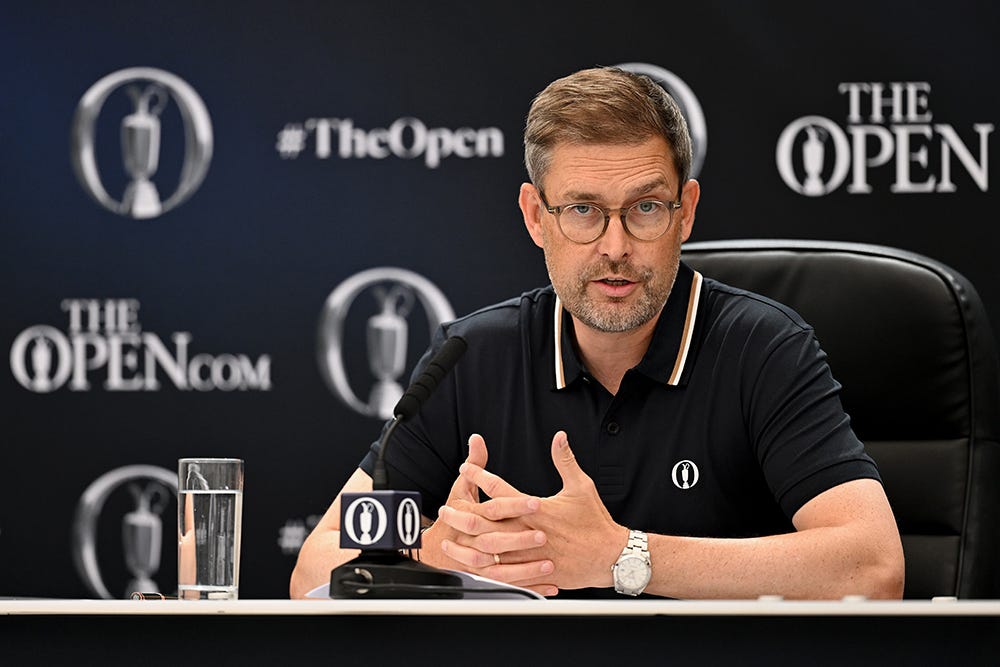
R&A CEO Mark Darbon could alter tee times if England reaches World Cup final (Oisin Keniry/R&A via Getty Images)
About the football …
World Cup fever has swept through England and Wednesday’s semifinal game against Argentina has been the prevailing topic of discussion in these parts ever since the 2-1 quarterfinal victory on Saturday over Norway.
And if England reached the final? UPDATE: Well, that crisis was averted after the Three Lions yielded the lead and the stage to Argentina with two late goals in less than six minutes to fall 2-1 in Atlanta.
The title game btween Spain and Argentine is Sunday at 8 p.m. local time, which had caused a bit of concern as it relates to the finish of the Open which generally ends before 7 p.m. in England — if there’s not a three-hole playoff.
There was chatter that the R&A might alter the final-round tee times to accommodate football-mad fans who might be inclined to skip out of here early or forget the golf altogether. Now there are likely to be no changes to the schedule now that Argentina will face Spain in the World Cup final.
“I’m an England football fan, so it would be a great problem to have,” said Mark Darbon, the CEO of the R&A, at a Wednesday news conference hours before the semifinal game in Atlanta. “But I guess also, because I’m an England football fan, we should also wait to see how the semifinal goes before we get too far ahead.
“Of course in the background, we’ve been doing a lot of thinking about this. Our final putt is currently scheduled for around 6:40 on Sunday. We think that, even if we go to a three-hole (aggregate) playoff, we’ve got time to complete the championship. So at this stage, no plans to alter anything, but we’ll maintain that under review and finalize our position after the semifinal.”
That position is no longer subject to change, although the World Cup final will still be a tough act to precede.
Last year, the final group teed off at 2:30 p.m. local time, with the first group off the tee at 8:50 a.m.
A subjective ranking of every Open venue
Since first hosting the Open in 1954, Royal Birkdale has been the most regular venue, other than St Andrews. This marks its 11 championship in 72 years, a nod to its popularity with the R&A.
For all of its 154 championships since 1860, only 14 different links venues have ever been used — four of which are no longer in the rotation (Prestwick, Musselburgh, Roayl Cinque Ports and Prince’s). One more — Portmarnock in the Republic of Ireland — is being considered as a future addition to the rotation.
Here is one man’s ranking of the 10 venues currently in use followed by the four that no longer host the championship — with some reasons for where they are in the pecking order.
1. The Old Course, St. Andrews, Scotland
Number of Opens: 30
First: 1873
Most recent: 2022
Next Up: 2027
Not everyone is a fan of the Old Course, which takes some getting used to, especially due to its immense subtleties. But St Andrews is considered the home of golf and the Old Course is one of the game’s true treasures. It is essentially the same place that Old Tom Morris nurtured in the 19th century and the town reeks of golf.
It has also produced some high-profile winners. Jack Nicklaus and Tiger Woods each won their twice. Seve Ballasteros won an Open at St Andrews, as did Nick Faldo. And yet, Arnold Palmer and Tom Watson did not. Cam Smith shot a final-round 64 in 2022 to win the last championship played there and deprive Rory McIlroy of joining the list.
2. Muirfield, Gullane, Scotland
Number of Opens: 16
First: 1892
Most recent: 2013
Up Next: TBD (hopefully as soon as 2029 or 2030)
Regarded as one of the finest links courses and the fairest of the Open venues, Muirfield is formally known as the Honourable Company of Edinburgh Golfers and remains very old school. (The preferred and sometimes required form of play at the course is foursomes or alternate shot). The course opened in 1891 and almost immediately became a replacement for nearby Musselburgh. And it’s tough to beat the list of champions: Harry Vardon, Walter Hagen, Gary Player, Jack Nicklaus, Tom Watson, Lee Trevino, Nick Faldo, Ernie Els and Phil Mickelson.
Muirfield was briefly taken out of consideration for future Opens until in 2017 it finally admitted women members. It is still working through some infrastructure issues with the R&A before it can be awarded its next Open. Mickelson rallied with a final-day 66 to capture the last Open played there in 2013.
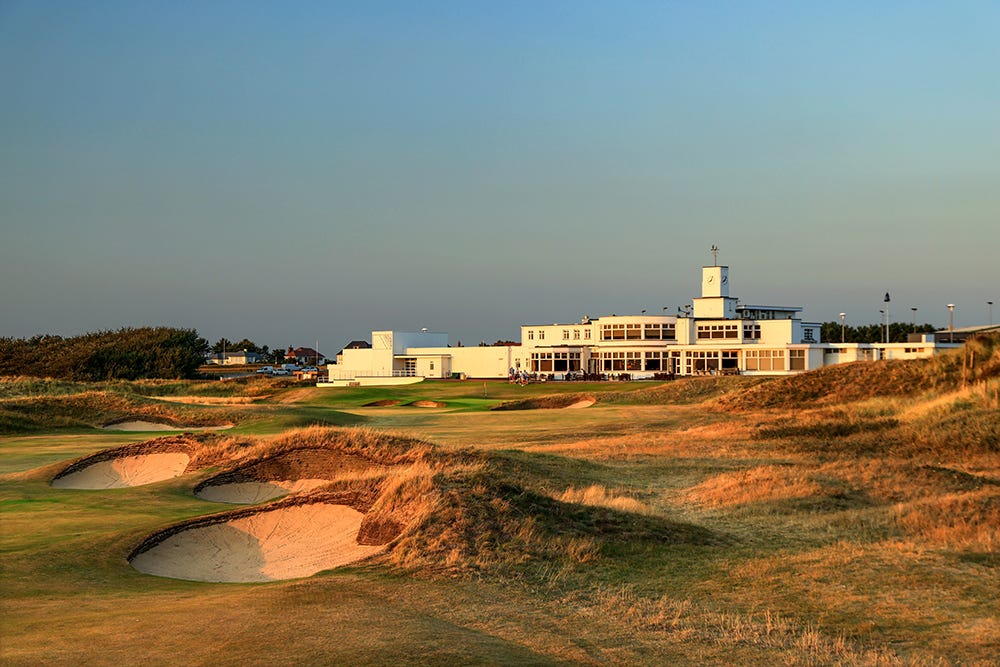
Royal Birkdale’s art deco clubhouse looks like a beached ship (David Cannon/R&A via Getty Images)
3. Royal Birkdale, Southport, England
Number of Opens: 10
First: 1954
Most recent: 2017
Up Next: Now
Relatively “new” by Open standards, Royal Birkdale is returning after a nine-year gap and has been consistently in the rotation of courses since five-time Open champion Peter Thomson won the first of his two at Birkdale in 1954. Arnold Palmer won the first of his two claret jugs at Birkdale in 1961 followed 10 years later by Lee Trevino. Branden Grace set a major championship record of 62 (since matched) during the third round of the 2017 tournament.
The course is also known for holding the 1969 Ryder Cup, where Jack Nicklaus, playing in the competition for the first time, conceded a short putt on the 18th green of the final match to England’s Tony Jacklin, assuring a 16-16 tie. Jordan Spieth won the last time at Birkdale in 2017.
4. Royal Portrush, Portrush, Northern Ireland
Number of Opens: 3
First: 1951
Last: 2025
Up Next: Royal Portrush is assured of at least one more per an agreement with the R&A, although it appears a lock to rejoin the rota on a consistent basis
Perhaps recency bias is in play here but there is no denying the scenery at Royal Portrush and the way in which the Open was received in 2019 and again last year. Revenue is a big part of the R&A mandate and spectators supported it in droves. Logistical concerns were among the reasons for the long absence between the first and second championships there, but those were alleviated by building two new holes with land from an adjacent course. It didn’t hurt that a run of Northern Irish golfers — Graeme McDowell, Rory McIlroy and Darren Clarke — won majors within a 13-month period more than a decade ago. Scottie Scheffler got his first claret jug and a fourth major title last year.
5. Royal Troon, Troon, Scotland
Number of Opens: 10
First: 1923
Last: 2024
Up Next: A lock but likely six to eight years away.
The 2024 tournament was an example of how exasperating links golf can be for the best players in the world. The conditions were difficult throughout. Both Rory McIlroy and Bryson DeChambeau missed the cut. The course is next door to Prestwick — which hosted the first 12 Opens from 1860-72 before the original rota was formed — and the two clubs have an annual event in which they start at one course and play through the holes onto the other and back again.
Troon has an out-and-back loop similar to the Old Course and is better suited to the demands of a modern Open, hence the decision to leave Prestwick for good more than 100 years ago. Xander Schauffele prevailed two years ago year, winning his second major title.
6. Carnoustie Golf Club, Carnoustie, Scotland
Number of Opens: 10
First: 1931
Last: 2018
Up Next: Unclear
Carnoustie’s lack of beauty is made up with brawn. It is generally regarded as the most difficult course in the rota and among the toughest in the world. But the infrastructure issues that caused a long layoff between Opens from 1975-99 are in play again as Carnoustie is a tiny town and spectator concerns will likely make returns infrequent.
That in no way takes away from the golf course, which is stout. It might be remembered best for Jean Van de Velde’s 72nd-hole implosion in 1999. Pádraig Harrington won the first of his three majors there in 2007, besting Sergio Garcia in a playoff. Ben Hogan completed the “Triple Crown” in 1953 by winning at Carnoustie, the only time he played in the Open. The last Open played at Carnoustie saw Francesco Molinari — paired with a resurgent Tiger Woods — hold on to win the claret jug.
7. Royal Liverpool, Hoylake, England
Number of Opens: 13
First: 1897
Last: 2023
Up Next: A lock for future Opens
The second-oldest seaside links in England, Royal Liverpool was the venue for the first British Amateur Championship in 1895 and two of three amateurs who won the Open — Harold Hilton and John Ball — were members at the club commonly known as Hoylake. It is also where Bobby Jones won the second leg of his Grand Slam in the 1930 Open.
Like Portrush, Royal Liverpool went a long period between Opens — from Robert De Vicenzo’s victory in 1967 to Tiger Woods’ win in 2006. Infrastructure issues were solved and now the course not far from Liverpool is a favorite of the R&A for its ability to pack in spectators. Brian Harmon prevailed during a rainy week at Hoylake in 2023.
8. Ailsa Course, Turnberry, Scotland
Number of Opens: 4
First: 1977
Last: 2009
Up Next: Murky
The most recent venue to join the rotation, Turnerry was an instant hit in 1977 when it produced a classic, the famous “Duel in the Sun” that saw Tom Watson prevail by a shot over Jack Nicklaus as they played the final 36 holes together and lapped the field by 10 shots.
The most picturesque of the venues with a lighthouse overlooking the Irish Sea and Ailsa Craig, Turnberry deserves a higher ranking but is plagued by a couple of big issues, including President Donald Trump’s ownership of the resort, which R&A officials have cited as among the reasons for pausing a return. But the bigger issue, however, is its remote location and lack of spectator access. The 2009 Open was lightly attended and the R&A has moved more toward higher-revenue producing venues. Watson was 59 years old when he nearly pulled of an incredible victory, ultimately falling to Stewart Cink in a playoff.
9. Royal St. George’s, Sandwich England
Number of Opens: 15
First: 1894
Last: 2021
Up Next: A 16th Open is just a matter of time
Jack Nicklaus once allegedly said that the Open venues get worse the farther south you go — a line often repeated but never confirmed. The inference was to Royal St. George’s, which is a quirky layout and the first course in England to host the championship. It’s proximity to London makes this a lock in the Open rotation, even if it might not be the favorite of most players.
Despite being located in the tiny town of Sandwich (approximately 5,000 people), the course has vast space for all the Open needs. Collin Morikawa captured the 2021 Open at Royal St. George’s.
10. Royal Lytham & St. Annes, Lytham St. Annes, England
Number of Opens: 11
First: 1926
Last: 2012
Up Next: 2028
Bobby Jones won the first Open at Lytham in 1926 and there was some hope the R&A might return this year to celebrate the 100th anniversary. Despite it being plagued by a small footprint boxed in on all sides, the R&A announced earlier this year that Lytham will return in 2028.
Located on England’s northwest coast, the venue itself is solid, with a rare par-3 opening hole and some 200 bunkers. But organizers admit this venue will lead to a smaller number of spectators being admitted. When Ernie Els birdied the 18th hole and Adam Scott bogeyed the last four in 2012, the Big Easy was the winner the last time the Open was at Lytham.
No longer part of the Open anymore, these four courses still exist and embrace their championship history.
11. Royal Cinque Ports, Deal, England
Number of Opens: 2
First: 1909
Last: 1920
Why it lost the Open: Logistics, proximity of Royal St. George’s
Still regarded as a challenging and excellent course, Royal Cinque Ports has been a Final Qualifying venue for the last several years as well as hosting big amateur events. It could probably still host the Open were it not for the lack of space needed to put on the modern championship. The course lost an Open to world wars in 1915 and 1938 and was moved in 1949 to Royal St. George’s due to flooding.
Deal, as it is also called, was the site for an instructive moment in golf history in 1920 when Walter Hagen — barred from the clubhouse because he was a pro and required to change in the pro shop — had his limo driver park in front of the club near a flag pole, where he changed his shoes each day. Hagen would go on to win the Open four times but that week started to change the way professional golfers were viewed. George Duncan won that championship in a two-day event that saw 36 holes played each day.
12. Prestwick Golf Club, Prestwick, Scotland
Number of Opens: 24
First: 1860
Last: 1925
Why it lost the Open: Inability to host large galleries, proximity of Royal Troon
The original home to the Open Championship, Prestwick is still the second-most used venue in the 154-tournament history of the event. It is no longer suited to hold the championship due to space limitations. The first 12 Opens were played at Prestwick, and 15 of its 24 were played on a 12-hole layout that was not revamped until the late 1880s. The first Open was 36 holes with the 12-hole course played three times in the same day.
Four of the original holes remain including the famous Himalayas and Alps but the quirky course remains a huge hit with visitors. Among the early-tournament lore, Young Tom Morris in 1870 won for the third straight time and started the tournament with a 3 on what was then a 578-yard opening hole that played as a par-6. The championship belt was retired after that as Young Tom got to keep it and the Open was cancelled in 1871 for lack of a trophy. Young Tom won the first claret jug at Prestwick in 1872 in the last of his four consecutive victories before he died in 1875.
Jim Barnes, who won the first PGA Championship in 1916, won the last Open played at Prestwick in 1925.
13. Prince’s, Sandwich, England
Number of Opens: 1
First and Last: 1932
Why it lost the Open: The course was damaged during World War II and Royal St. George’s next door became a better option
When it hosted the Open for the only time in 1932, Prince’s gave the R&A three venues within a few miles of each other (including Royal Cinque Ports). Gene Sarazen set a scoring record that stood for 18 years, leading after each round before winning by six over Macdonald Smith. But much of the course was destroyed during World War II as the Royal Air force used it for bombing target practice. Today, the facility is 27 holes.
14. Musselburgh, Musselburgh, Scotland
Number of Opens: 6
First: 1874
Last: 1889
Why it lost the Open: It is a nine-hole layout that was deemed out of fashion early on as nearby Muirfield took prominence
Last but certainly not least, Musselburgh goes to the end of the list simply because somebody had to and it is the course farthest removed from hosting the championship, last doing so in 1889. The nine-hole course is mostly contained within an existing turf horse track and remains a popular destination for golfers who often play it with rented hickories and replica gutta percha balls. Its clubhouse across the street is a shrine to its history with the Open. It was a part of the original three-course rota that alternated between St. Andrews, Prestwick and Musselburgh.
Mungo Park beat out Young Tom Morris in the first Open at Musselburgh in 1874. In the last Open played there in 1889, Willie Park Jr. and Andrew Kirkaldy were tied after 36 holes, contested in one day. That led to a 36-hole playoff won three days later by Park Jr.. The Open would be contested over 36 holes just twice more before the first Open at Muirfield in 1892 changed the championship to a 72-hole tournament.
It's Brian Harman, not Harmon.